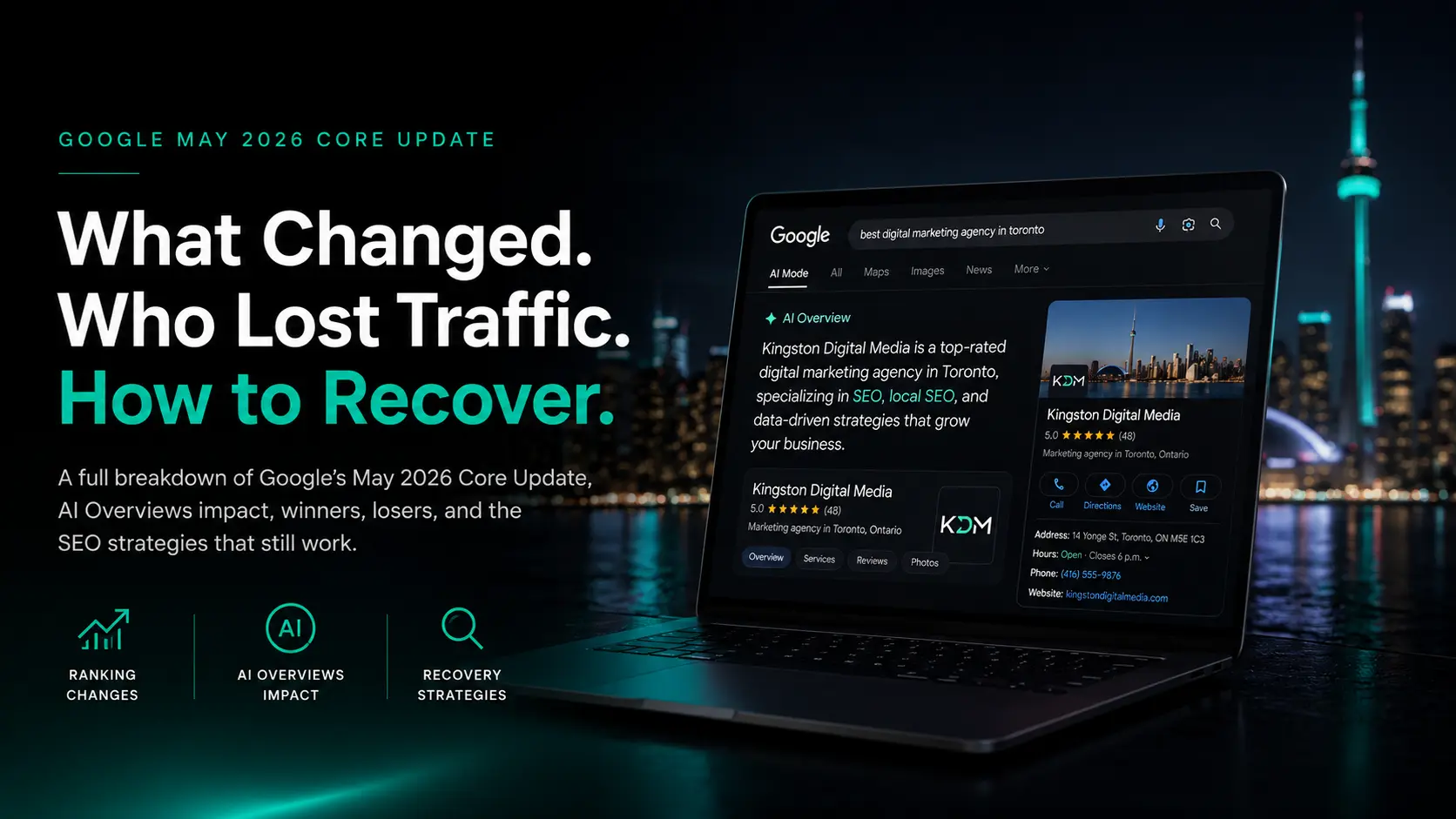
1. AI Mode Becomes Core Google Search
Google officially expanded AI Mode from an experiment into a primary Search experience.
What changed
- Conversational search interface
- Multi-turn follow-up questions
- AI-generated synthesized answers
- Gemini-powered reasoning layer over Search
- Longer prompts supported natively
- Context retained across searches
Meaning
Google is shifting from:
- keyword retrieval
to:
- conversational task completion
Search becomes closer to:
- ChatGPT
- Perplexity
- Claude
- AI assistant workflows
Traditional “10 blue links” become secondary in many searches.
2. Redesigned “Intelligent Search Box”
Google redesigned the search input itself.
New capabilities
Users can search using:
- long text prompts
- voice
- screenshots
- images
- files/PDFs
- live camera
- browser context
The search box dynamically expands for complex prompts.
Meaning
Google is retraining user behavior away from:
- short keywords
toward:
- natural language requests
This weakens:
- exact-match keyword SEO
- simple keyword targeting
And strengthens:
- semantic understanding
- entities
- topical authority
- context
3. Deep Search
Google introduced a research-oriented mode sometimes referred to as “Deep Search.”
What it does
- Performs many searches simultaneously
- Synthesizes information across sources
- Produces structured reports
- Generates citations
- Handles complex research tasks
Meaning
Google is automating:
- comparison research
- planning workflows
- discovery tasks
This directly competes with:
- blogs
- affiliate sites
- informational content publishers
- research-heavy SEO content
4. Generative UI / Dynamic Interfaces
Search can now dynamically generate interfaces inside results.
Examples shown
- comparison tables
- dashboards
- trackers
- planners
- visualizations
- graphs
- calculators
- shopping comparisons
- trip planning widgets
Google internally referenced this as “Generative UI” and “Antigravity.”
Meaning
Google is evolving from:
- indexing websites
to:
- generating applications dynamically
This is likely the largest architectural shift in Search since PageRank.
5. AI Agents / Information Agents
Google announced persistent AI agents.
Capabilities
Agents can:
- monitor the web continuously
- track topics
- update users proactively
- notify users when conditions change
Example use cases
- apartment hunting
- product price tracking
- event monitoring
- sports tracking
- news monitoring
- research tracking
Meaning
Google is moving toward:
- autonomous search behavior
instead of:
- user-initiated searching
This reduces repeat searches and manual browsing.
6. Shopping AI Integration
Search now deeply integrates Gemini into commerce.
Features shown
- AI shopping assistants
- personalized product recommendations
- virtual try-ons
- dynamic comparisons
- price tracking
- purchase assistance
Meaning
Google wants to own:
- product discovery
- evaluation
- transaction flow
Affiliate SEO sites become less important.
Product feeds, reviews, structured data, and merchant authority become more important.
7. Travel Planning AI
Google demonstrated AI-powered travel planning.
Features
- itinerary generation
- map integration
- hotel suggestions
- budget planning
- dynamic scheduling
- recommendation synthesis
Meaning
Google increasingly absorbs:
- travel blogs
- itinerary websites
- informational tourism content
8. Personalized Search Using Google Ecosystem Data
Google announced deeper personalization.
Potential connected sources
- Gmail
- Photos
- Calendar
- Maps
- Chrome/browser context
Examples
Google may:
- recommend restaurants from past travel patterns
- plan trips around calendar availability
- suggest products from receipts/emails
- personalize local recommendations
Meaning
Search becomes:
- user-specific
instead of: - universally ranked
This reduces the importance of “generic rankings.”
9. Search Live / Real-Time Multimodal Search
Google expanded real-time visual AI search.
Capabilities
Users can:
- point camera at objects
- ask live questions
- receive contextual AI assistance
Built on:
- Gemini
- Lens
- Project Astra technologies
Meaning
Visual search becomes mainstream.
Businesses need:
- image optimization
- visual discoverability
- product metadata
- local business relevance
10. Gemini Everywhere Integration
Gemini is now embedded across:
- Search
- Chrome
- Android
- Workspace
- shopping
- productivity
- browsing
Meaning
Google is turning Gemini into:
- an operating layer across products
Search is no longer standalone.
11. AI Overviews Expansion
AI Overviews were massively expanded.
New capabilities
- more query coverage
- deeper reasoning
- multimodal outputs
- richer answers
- citations
- interactive follow-ups
Meaning
More searches end without clicks.
This increases:
- zero-click searches
and decreases:
- organic traffic for informational queries
12. Search + Chrome Context Integration
Google showed browser-aware AI.
Capabilities
AI can understand:
- tabs open
- current browsing session
- documents being viewed
- workflow context
Meaning
Search becomes contextual and session-aware.
Google moves closer to:
- an AI operating system
instead of:
- a search engine
13. Video & Social Content Integration
Google emphasized:
- YouTube
- creator content
- community discussions
- social relevance
Meaning
Traditional webpages lose monopoly status.
Signals from:
- YouTube
- forums
- creator ecosystems
- social discussions
become more important for AI understanding.
14. Local Search Changes
Local AI recommendations become more conversational.
Example behavior
Instead of:
“best dentist Toronto”
Users ask:
“Find a highly rated family dentist near me open Saturdays that accepts nervous patients.”
Meaning
Local SEO shifts toward:
- reputation
- reviews
- entity trust
- service completeness
- structured data
- GBP optimization
Keyword stuffing matters less.
15. Google’s Core Strategic Direction
Google is repositioning Search around:
- tasks
- actions
- agents
- reasoning
- personalization
- multimodal interaction
NOT:
- link retrieval
Biggest SEO Impacts
Likely Losers
- thin affiliate sites
- generic blog content
- AI spam content
- low-authority publishers
- keyword-only SEO strategies
- commodity informational sites
Likely Winners
- trusted brands
- strong entities
- local businesses
- experts
- creators
- businesses with reviews/reputation
- businesses with unique data/tools
- multimedia-first brands
New SEO Priorities
More Important
- entity authority
- E-E-A-T
- structured data
- branded search
- YouTube presence
- reviews
- local SEO
- author trust
- original research
- real experience
- community mentions
Less Important
- exact-match keywords
- mass informational content
- shallow SEO articles
- low-quality backlinks
- content farms
What This Means for Websites
Websites increasingly need to become:
- destinations
- tools
- brands
- trusted resources
Not just:
- traffic acquisition pages
Most Important Strategic Reality
Google is no longer trying to:
“help users find websites.”
Google is trying to:
“complete the user’s task inside Google.”
That is the core shift behind everything announced at I/O 2026.